For European buyers of steel construction screws and construction fasteners, carbon data is becoming a purchasing requirement—not simply an ESG preference. From 1 January 2026, the EU Carbon Border Adjustment Mechanism (CBAM) entered its definitive regime. For imports within CBAM scope, embedded emissions now create a financial compliance obligation for EU importers.
At Fong Prean, we believe the most useful response is clarity. CBAM does not automatically apply to every product called a “screw.” Coverage depends on the product’s customs classification and whether it falls within CBAM’s iron and steel scope. However, buyers importing covered steel screws, fasteners, or related goods should treat carbon data as seriously as product specifications, origin records, lead time, and pricing.
The 2023–2025 CBAM transitional period focused on reporting. From 2026, the system moved into its definitive phase: qualifying EU importers must account for the emissions embedded in covered imports and surrender the corresponding CBAM certificates.
The European Commission states that importers, or their indirect customs representatives, importing more than the single mass-based threshold of 50 tonnes of CBAM goods into the EU must apply for authorised CBAM declarant status. Those declarants will report embedded emissions and surrender certificates annually. European Commission CBAM definitive-regime guidance
For a purchaser in Germany, the Netherlands, Denmark, Sweden, or another EU market, this changes supplier evaluation. A supplier that can provide dependable product and emissions evidence helps reduce uncertainty. A supplier that cannot provide it may expose the importer to default-value reporting, delayed declarations, extra internal work, and compliance risk.
A CBAM certificate represents the carbon cost associated with embedded emissions in imported CBAM goods. Its price is linked to EU Emissions Trading System allowance prices: calculated quarterly for 2026 and weekly from 2027 onward. CBAM certificate pricing rules
For planning purposes, the basic logic is:
Imported quantity × actual embedded emissions per ton = embedded emissions to be declared
The final number of certificates to surrender is then adjusted under CBAM rules. These adjustments may reflect the gradual phase-out of EU ETS free allocation and any recognised carbon price already paid in the country of origin. Importers should therefore avoid using a simple “tonnage multiplied by a fixed carbon price” calculation as their final compliance figure.
For procurement planning, however, the message is clear: lower, credible, and properly verified embedded-emissions data can matter financially.
The following timeline turns a regulatory change into practical procurement actions.
Timing | What Happens | What Buyers Should Do |
1 January 2026 | CBAM definitive regime begins | Identify covered CN codes, origin countries, suppliers, and annual import volumes |
During 2026 | Suppliers monitor and calculate embedded emissions | Request product-level and facility-level emissions information early |
February 2027 | Authorised declarants can purchase CBAM certificates | Prepare carbon-cost forecasts and confirm data readiness |
30 September 2027 | First CBAM declaration for 2026 imports is due, with corresponding certificate surrender | Submit complete verified or default-value-based information through the CBAM Registry |
The Commission confirms that CBAM declarants can purchase certificates from February 2027 and that the first declaration for 2026 imports is due by 30 September 2027. Official CBAM verification timeline
A missed deadline is not simply an administrative issue. It can create non-compliance exposure, potential penalties, and disruption to future sourcing decisions.
A CBAM certificate represents the carbon cost associated with embedded emissions in imported CBAM goods. Its price is linked to EU Emissions Trading System allowance prices: calculated quarterly for 2026 and weekly from 2027 onward. CBAM certificate pricing rules
For planning purposes, the basic logic is:
Imported quantity × actual embedded emissions per tonne = embedded emissions to be declared
The final number of certificates to surrender is then adjusted under CBAM rules. These adjustments may reflect the gradual phase-out of EU ETS free allocation and any recognised carbon price already paid in the country of origin. Importers should therefore avoid using a simple “tonnage multiplied by a fixed carbon price” calculation as their final compliance figure.
For procurement planning, however, the message is clear: lower, credible, and properly verified embedded-emissions data can matter financially.
For steel construction screws and construction fasteners, carbon emissions do not arise from one single production step. They are linked to the supply chain and manufacturing route.
The main sources commonly include:
Steelmaking and the production of steel wire rod or other precursor materials.
Wire drawing and material preparation.
Cold heading, cold forging, thread rolling, drilling, or point forming.
Heat treatment where required for product performance.
Surface treatment and coating, such as zinc plating or corrosion-protection processes.
Electricity and fuel used in manufacturing operations.
There is no reliable universal percentage that applies to every screw. The proportion varies according to steel source, recycled-material content, production route, energy mix, fastener geometry, coating, and processing requirements. Buyers should be cautious when a supplier presents a generic “carbon percentage” without explaining product boundaries, assumptions, evidence, and calculation methodology.
An Environmental Product Declaration, or EPD, can be useful procurement documentation, but it does not automatically reduce the number of CBAM certificates an importer must surrender.
An EPD may help organise product environmental data and support sustainability assessment. However, for CBAM purposes, actual emissions data must follow the applicable CBAM methodology. Where actual values are used, the European Commission requires verification by an independent CBAM verifier accredited by an EU national accreditation body. CBAM actual-emissions verification requirements
In practical terms:
An EPD can support data transparency.
An EPD is not a substitute for CBAM-required calculation and verification.
Actual verified emissions may be financially preferable to default values if they are lower and accepted under CBAM rules.
A buyer should not promise cost savings until the relevant data, verification, customs classification, and regulatory adjustments have been reviewed.
This is why procurement teams should ask not only, “Do you have an EPD?” but also, “Can you provide CBAM-ready actual emissions data and supporting verification?”
Before placing a 2026 order for covered construction fasteners, we recommend requesting the following information from suppliers:
Product description, CN code, material grade, and country of origin.
Imported quantity by product type and shipment period.
Manufacturing installation information and production route.
Data for embedded emissions, including relevant precursor material information.
Calculation methodology, reporting period, boundaries, and assumptions.
Evidence of any carbon price effectively paid in the country of origin, where applicable.
A plan for independent CBAM verification when actual values are to be declared.
This checklist gives purchasing, sustainability, finance, and customs teams one shared structure. It also prevents a common problem: discovering that emissions data is incomplete only when the importer is preparing its annual declaration.
Q1.Does CBAM apply to every construction screw imported into the EU?
No. CBAM coverage depends on the product’s customs CN code, material, and whether it falls within the iron and steel goods listed in CBAM scope. Buyers should confirm classification before making a compliance decision.
Q2.When must EU importers submit the first CBAM declaration?
The first CBAM declaration covers 2026 imports and must be submitted by 30 September 2027. The corresponding CBAM certificates must also be surrendered by that date.
Q3.When can importers buy CBAM certificates?
Authorised CBAM declarants can purchase CBAM certificates from February 2027 through the central platform.
Q4.Can an EPD replace CBAM emissions data?
No. An EPD may support product transparency, but it does not replace CBAM-specific emissions calculations or the required independent verification of actual emissions data.
Q5.What happens if a supplier cannot provide actual emissions data?
The importer may need to use European Commission default values where permitted. This can increase uncertainty and may result in a less favourable carbon-cost outcome than using credible actual verified data.
Q6.Does ISO 14064-1:2018 alone make a supplier CBAM compliant?
No. ISO 14064-1:2018 is an organisational greenhouse-gas inventory standard. It is valuable for establishing reliable carbon-data management, but CBAM actual emissions must still meet CBAM calculation and verification requirements.
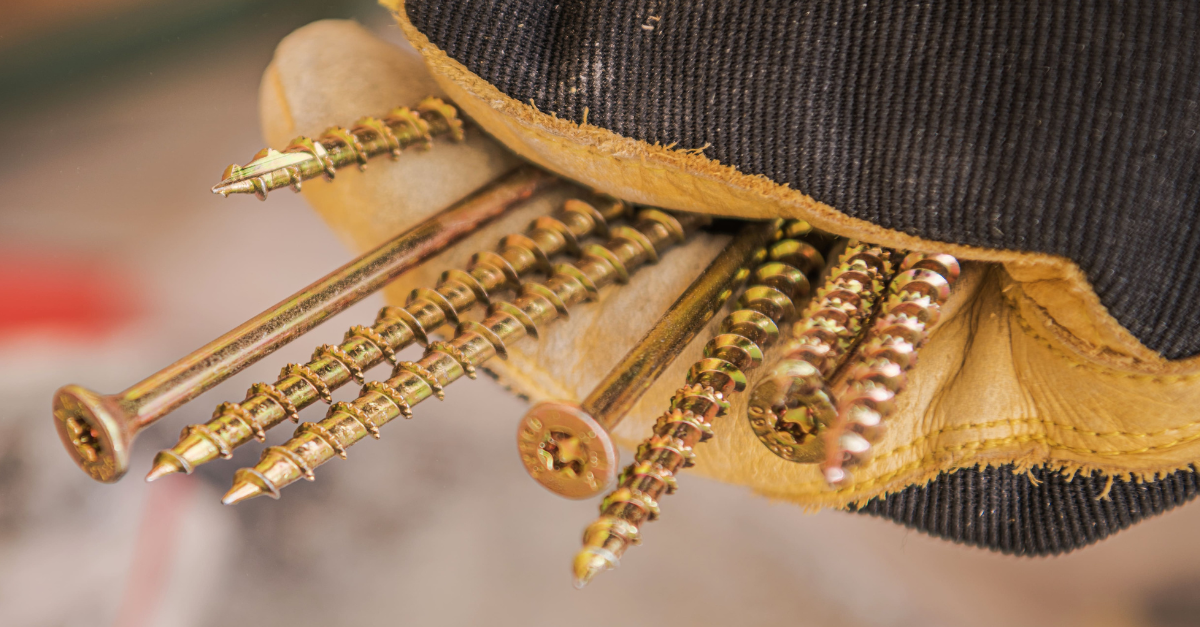
At Fong Prean, we manufacture construction screws and customized fastening solutions for construction applications. Our ESG programe includes carbon-footprint verification, and our certification page displays ISO 14064-1:2018 verification. These capabilities help us organize emissions information for customers who need stronger supply-chain transparency. Explore our customized screw R&D capabilities to discuss fastening requirements together with documentation needs.
If your team is sourcing covered construction fasteners for the European market, contact Fong Prean with your product specification, target market, estimated annual volume, and CBAM data requirements. We can help you begin the supplier-data conversation before compliance deadlines become urgent.
Related Articles

Building for a Greener Future: Top Sustainable Materials and Fastener Trends for 2025 Construction Projects
2025/11/04
Can Screws Support Sustainability? How Small Fasteners Shape the Details of Green Building
2026/07/09

2026 Construction Outlook: How Modular Building, Digitalization, and Sustainability Are Reshaping Fastener Demand
2025/12/04

Why Do European and American Screw Brands Focus on Installation Efficiency? How Should Taiwan Manufacturers Respond?
2026/05/25