Product Description
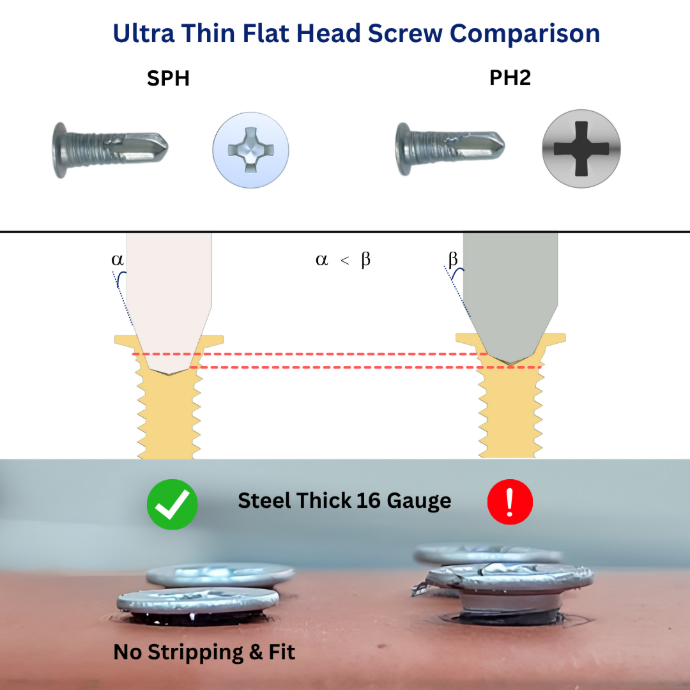
Stable Drive Performance for Ultra-Thin Head Screws
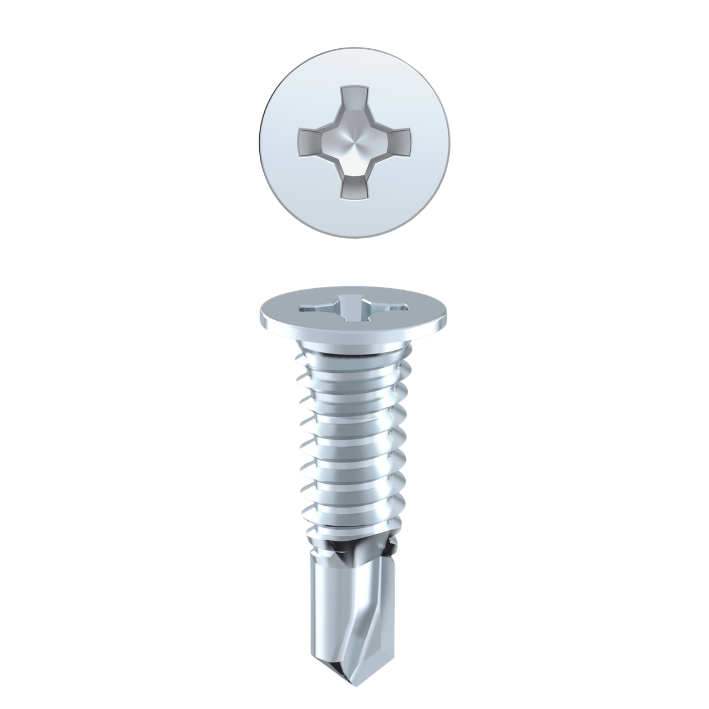
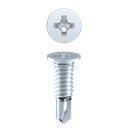
The SPH Phillips Recess Drive is designed for thin head and ultra-thin head screws where standard PH2 recesses may slip, strip, or lose drive stability during fastening.
By improving bit engagement without increasing screw head thickness, SPH helps deliver stronger torque transfer, reduced cam-out, and more stable installation in steel and thin metal sheet application.
- SPH Phillips Recess for Higher Drive Torque
The SPH Phillips recess improves bit engagement and helps deliver over 30% higher drive torque than standard PH2 recesses.
- Ultra-Thin Head Design
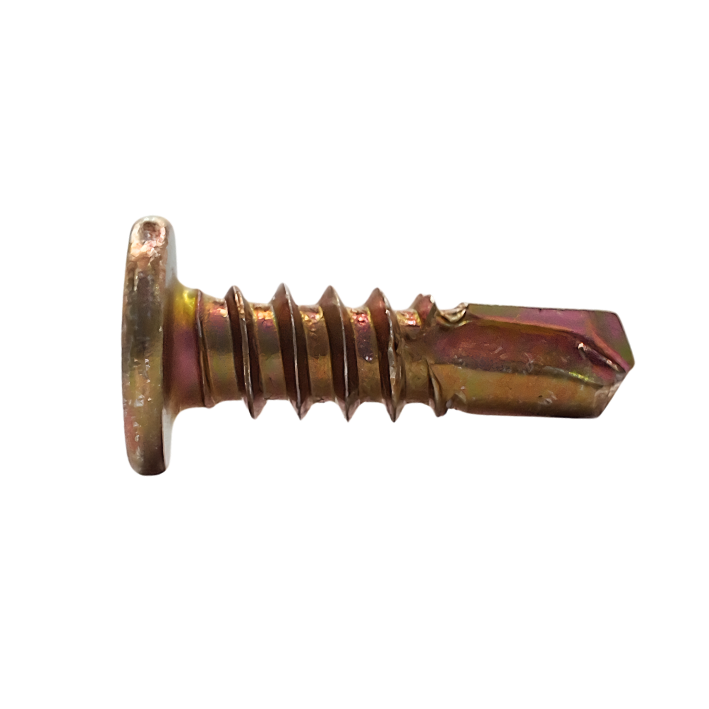
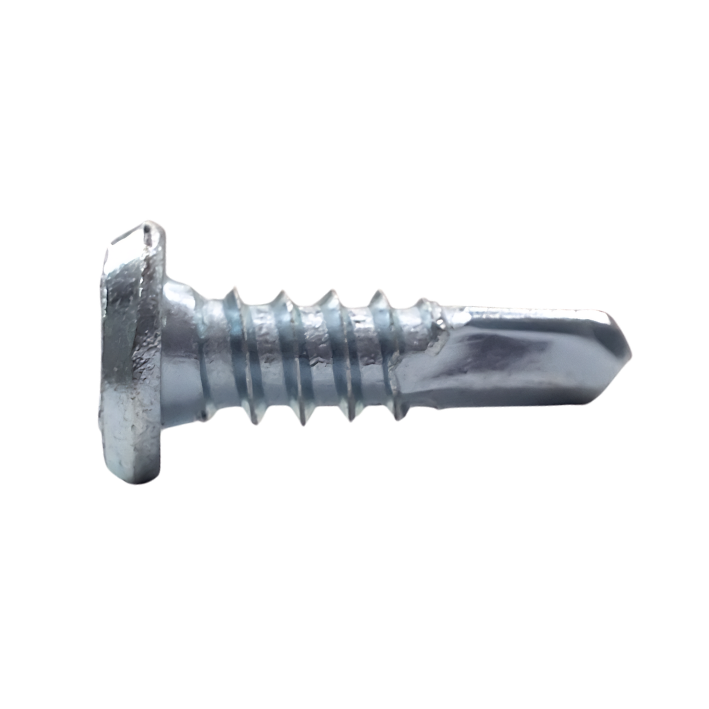
SPH keeps the screw head low-profile while improving drive stability, making it suitable for thin head and ultra-thin head screw applications.
- Reduced Cam-Out
The SPH recess geometry helps reduce slipping and cam-out during steel and thin metal fastening.
- Better Recess Integrity
SPH helps reduce recess damage, stripping, and bit jump-out under higher torque.
- Stable Fit for Steel Applications
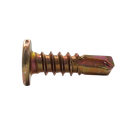
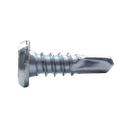
Designed for thin head self-drilling screws, SPH supports stable fastening into steel applications such as 16 gauge steel.
Specification
SPH vs PH2 Torque Test | Higher Stability for Thin Head Screws
Compared with a standard PH2 recess, SPH delivers a higher and more consistent torque range in thin head screw applications. In the test, PH2 reached an average torque of 62.9 kgf, while SPH reached 90.4 kgf, showing stronger drive performance without increasing screw head thickness.
This result is especially important for ultra-thin head self-drilling screws, where limited head height can make bit slipping, cam-out, and recess damage more likely during fastening. SPH improves bit fit and torque transfer, helping the screw drive more smoothly into steel and thin metal sheets.
Why This Matters?
For thin head and ultra-thin head screw designs, stable recess performance directly affects installation quality. SPH helps support:
• Higher drive torque
• Reduced cam-out risk
• Better recess integrity
• More stable bit engagement
• Smoother fastening into steel and thin metal applications
• Lower risk of stripping, recess damage, and installation failure