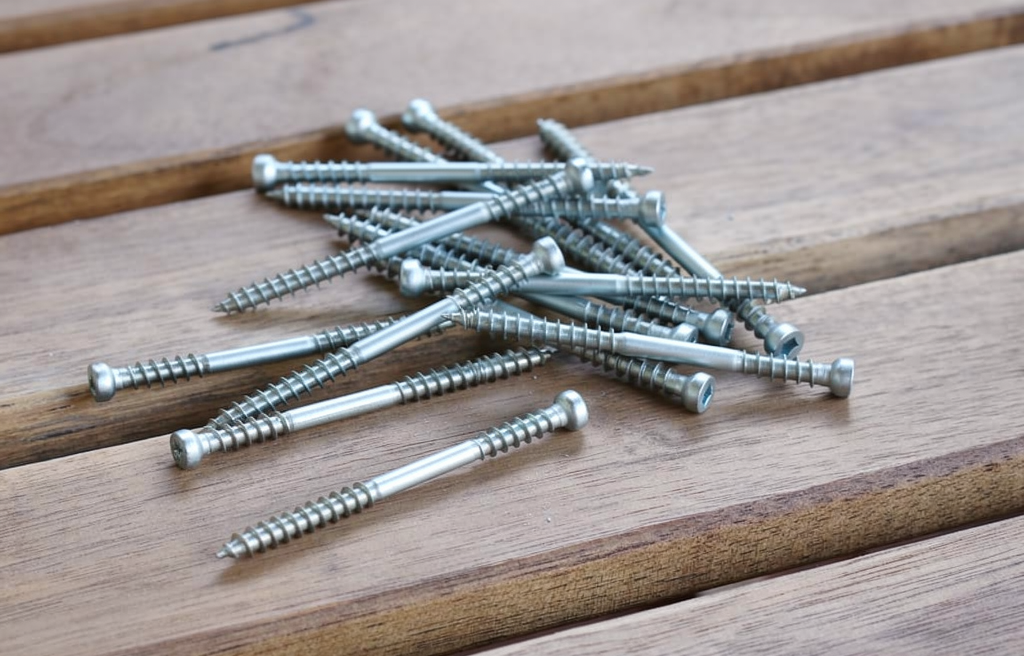
In modern decking construction, a project is judged twice: first by its structural reliability, and then by its finished appearance. While corrosion resistance and holding power are standard baseline requirements, one critical design detail is frequently underestimated: the geometry of the screw head.
On a completed deck, the fastener entry point is the only part of the hardware that remains visible. This means head design directly dictates the visual quality of the entire surface. When contractors treat fasteners as interchangeable commodities, especially when working with premium timber or advanced decking systems, it inevitably leads to visible defects, structural inconsistencies, and avoidable callbacks.
To meet rising architectural standards, the industry is rethinking fastening from the top down, leading to the growing prominence of cylindrical head decking screws.
The Hidden Costs of an Unmatched Fastener
Historically, discussions around decking fasteners focused heavily on thread patterns and anti-corrosion coatings. However, decking is uniquely surface-sensitive.
Traditional bugle head or wide countersunk screws were engineered for raw structural hold in framing, not for refined exposed surfaces. When these aggressive, wide-head geometries are driven into dense hardwoods or appearance-grade composite boards, they create predictable and costly pain points:
- Surface Disruption: Wide heads displace too much material upon entry. This aggressive wedging action leads to splintering, fiber lifting, or unsightly "mushrooming" around the hole.
- Inconsistent Seating Depth: Broad heads struggle to sink uniformly across varying wood grain densities. This leaves the deck surface bumpy and uneven, with fixing points sitting at different depths from board to board.
- Visual Clutter: Large fastener profiles interrupt the natural grain and clean lines of premium decking. On high-end projects, this visual noise significantly degrades the perceived quality of the craftsmanship.
These are not merely aesthetic issues. Surface damage introduces pathways for moisture, accelerating wood rot and board degradation.
The Evolution of the Solution: The Cylindrical Head
To resolve the tension between holding power and surface preservation, fastening technology evolved. The result is the cylindrical head decking screw.
Defined by a compact, vertical head profile, this design shifts the physical mechanics of the installation. Instead of forcefully pushing material outward like a wedge, the cylindrical head creates a controlled, low-impact seating environment.
This restrained contact area offers a three-part solution to modern decking challenges:
- A Refined Finish: The minimal diameter drastically reduces the fastener's visual footprint, allowing the texture and tone of the decking material to remain the focal point.
- Preserved Board Integrity: By minimizing material displacement, cylindrical heads prevent the cracking and splintering common near board edges and in brittle substrates.
- Predictable Seating: The vertical profile ensures consistent depth control, allowing installers to achieve a perfectly flush or uniformly countersunk finish across the entire deck span.
Matching the Fastener to the Substrate: The Complete Equation
Understanding the benefits of a cylindrical head is only the first step. For a fastener to perform flawlessly, the head geometry cannot act alone, it must be precisely matched with the correct point and thread design to suit the specific decking material.
Different substrates create different physical demands. Some woods require a rapid initial bite; others demand reduced torque to prevent splitting, while ultra-dense materials require aggressive chip evacuation.
This is the engineering philosophy behind Fong Prean’s decking solutions. Rather than offering a one-size-fits-all product, Fong Prean engineers cylindrical head screws as complete, application-driven systems. By aligning head design, point geometry, and thread behavior, these fasteners serve as the natural answer to specific jobsite challenges:
1. For Fast, Precise Starts in Standard Timber
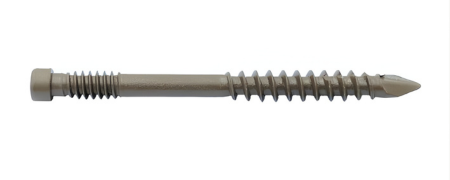
When installation speed and clean engagement are the priorities, rapid penetration is required to keep the project on schedule.
- The Solution: The fast-penetrating Cylindrical Trim Head Screw with Double Thread and Sharp Arrow Point is engineered to bite into timber instantly. The sharp arrow point anchors the fastener without wandering, while the double thread drives the screw home quickly. The cylindrical head follows, leaving a compact, neat finish that maintains surface aesthetic without slowing down the installer.
2. For Splinter-Free Driving in Brittle Wood
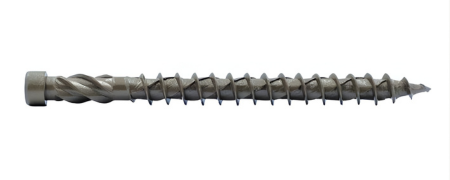
Woods that are prone to cracking or edge damage require a fastener that cuts through the material rather than forcing its way through the grain.
- The Solution: The anti-splitting Cylindrical Trim Head Screw featuring Twisted Thread and Type 17 Sharp Point provides a highly controlled driving action. The Type 17 point actively cuts and clears wood fibers during entry to prevent tension buildup. Paired with a twisted thread that reduces friction, this screw allows the cylindrical head to seat smoothly, eliminating the stress that typically causes surface splintering.
3. For Direct Fastening in Aluminum Decking Systems
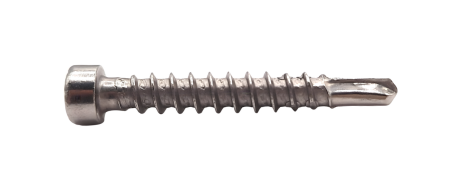
Modern decking systems built on aluminum substructures or specialized clip-based designs require a fastener that can drill effectively while seating neatly in low-clearance areas.
- The Solution: The self-drilling Cylindrical Head Screw with U-Cutting Thread for wood-to-aluminum systems is specifically designed for high-density and metal-hybrid installations. The integrated drill point enables direct penetration into aluminum joists, while the U-cutting thread clears wood chips to ensure a smoother, jam-free installation. This allows the cylindrical head to seat cleanly and consistently, even in demanding modern decking applications.
Frequently Asked Questions: Cylindrical Head Decking Screws
Q1. Why choose cylindrical head screws over traditional bugle or countersunk heads?
A1: Traditional bugle head screws are designed for raw structural hold, which often causes "mushrooming" or splintering in visible decking. Cylindrical head screws (also known as trim heads) feature a compact, vertical profile. This design allows the screw to seat deeper with minimal surface disruption, resulting in a cleaner, professional finish that doesn't distract from the natural wood grain.
Q2. How do cylindrical head decking screws prevent wood splitting and "mushrooming"?
A2: Surface damage like splitting or mushrooming occurs when a screw head displaces too much material upon entry. The cylindrical head has a smaller diameter that acts less like a wedge and more like a precision insert. When paired with high-performance features like a Type 17 point or U-cutting threads, the screw clears debris efficiently, allowing the head to sit flush without stressing the surrounding fibers.
Q3. Do I still need to pre-drill when using cylindrical trim head screws?
A3: While cylindrical heads reduce the risk of splitting, the need for pre-drilling depends on your decking material. However, modern designs like the Fong Prean Drill Point or Sharp Arrow Point are engineered to bite and clear material instantly, often eliminating the need for pre-drilling in most standard timber applications, significantly saving on labor time.
Q4. How does head geometry impact the long-term durability of a deck?
A4: A poorly seated screw is more than an eyesore, it’s a maintenance risk. If a head causes surface splintering or sits unevenly, it creates pockets where moisture can collect, leading to localized rot or board warping. The predictable seating of a cylindrical head ensures a tight, flush seal that protects the board’s integrity and extends the overall lifespan of the deck.
Securing the Surface
In modern decking, the fastener does far more than hold boards to joists. It dictates the final aesthetic, controls the installation workflow, and determines the long-term durability of the surface.
For procurement teams and contractors, moving away from generic hardware and selecting substrate-specific cylindrical head decking screws is no longer just an aesthetic choice. It is a strategic requirement for delivering flawless, high-performance decking systems from the surface down.