Key Takeaway
Artificial intelligence and cloud computing are accelerating global data center construction.
As these facilities become critical infrastructure, construction standards
are shifting toward stronger structural systems, higher engineering precision,
and more reliable installation components.
This transformation is also placing greater emphasis on consistent and dependable fastening systems within modern construction projects.
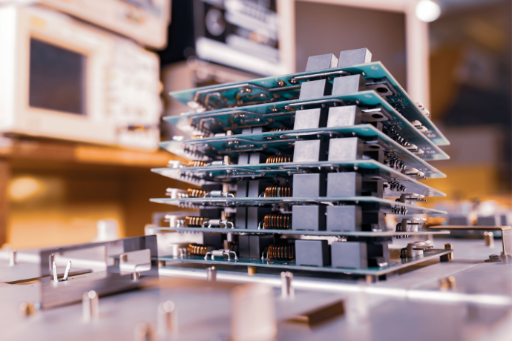
Data Centers Are Becoming Critical Infrastructure
Data centers are rapidly evolving from IT facilities into essential infrastructure for the digital economy.
As artificial intelligence and cloud computing continue to expand, demand for large-scale data center infrastructure is growing at an unprecedented pace. Major technology hubs across the United States, Europe, and Asia are accelerating the development of new facilities to support rising computing demand.
Today, data centers are increasingly recognized as critical infrastructure supporting digital services, cloud platforms, and AI workloads.
As a result, many modern data center projects now resemble large industrial or energy facilities rather than traditional commercial buildings.
Global Investment in Data Center Construction Is Accelerating
Rising demand for AI computing is driving a major wave of investment in data center construction.
Rising demand for AI computing is driving a major wave of investment in data center construction.
Moody’s estimates that global investment in data center expansion could reach $3 trillion over the next five years. McKinsey projects that by 2030, capital expenditures on data center infrastructure may exceed $1.7 trillion worldwide.
These developments position data centers as one of the fastest-growing segments of the global construction industry.
At the same time, the scale of these facilities is increasing. Traditional data centers were typically designed at capacities of several tens of megawatts. New AI-focused campuses are increasingly being planned at the gigawatt scale.
Higher Equipment Density Is Increasing Engineering Complexity
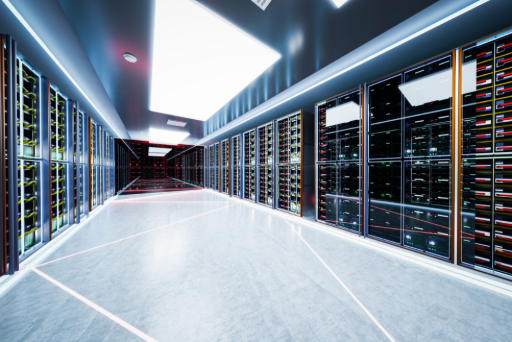
AI workloads are significantly increasing both the density and complexity of data center infrastructure.
Unlike conventional commercial buildings, data centers are designed around continuous operation and system reliability. AI servers require substantially more power than traditional IT hardware, with individual racks often consuming between 50kW and 120kW.
These conditions place new demands on engineering and construction, including:
•
Structural systems capable of supporting heavier loads
• More complex mechanical and electrical infrastructure
• Higher precision in equipment installation and fastening
• Stricter construction quality control
Modern data centers are becoming highly specialized facilities that are significantly more complex than traditional commercial buildings.
Because these systems must operate continuously, installation quality becomes critical. Structural supports, cable management systems, cooling equipment, and electrical infrastructure all rely on stable mechanical connections.
As a result, fastening systems play an increasingly important role in maintaining long-term reliability across large-scale data center facilities.
Modular Construction Is Transforming Data Center Projects
Modular and prefabricated construction strategies are increasingly being adopted in data center development.
Modular and prefabricated construction strategies are increasingly being adopted in data center development.
To accelerate delivery timelines, many developers now assemble mechanical and electrical components off-site before transporting them to the project location for final installation.
Industry studies suggest that modular construction can reduce project timelines by 30% to 50%. This shift toward industrialized construction methods is reshaping how data center facilities are designed, built, and delivered.
For construction supply chains, modular construction also requires greater consistency in components and installation systems. Prefabricated modules must integrate precisely on-site, placing greater importance on standardized and reliable fastening solutions.
Cooling and Power Demands Are Reshaping Facility Design
The high heat output generated by AI computing is also changing how data centers are engineered.
Compared with traditional IT workloads, AI systems produce significantly more heat and require more advanced cooling technologies.
Many next-generation facilities are adopting liquid cooling solutions such as:
•
Direct-to-chip cooling
• Immersion cooling
Energy demand is also becoming a major constraint for data center expansion. Some projections suggest that by 2030, data centers could account for around 4% of global electricity consumption.
In certain regions, power availability is already influencing where new facilities can be developed.
Industry Insight
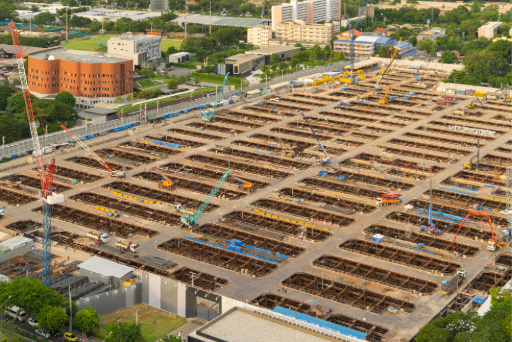
As facilities grow larger and more complex, construction supply chains are placing greater emphasis on long-term performance, installation consistency, and structural reliability.
From a construction supply chain perspective, the rapid expansion of AI infrastructure is not only increasing building activity but also raising expectations for installation quality and system stability.
Even small components used repeatedly across a facility can influence overall reliability when deployed at large scale.
Implications for the Construction Supply Chain
The rapid growth of data center construction is also creating new pressures across the construction supply chain.
These facilities contain large numbers of systems that must operate continuously, including:
•
Server racks
• Cable management systems
• Cooling infrastructure
• Electrical distribution equipment
All of these systems depend on stable mechanical connections to ensure long-term operational reliability. As a result, construction projects are placing greater emphasis on component reliability, installation quality, and long-term performance.
What This Means for Construction Fasteners?
As data center projects grow larger and more complex, the role of structural and installation components is becoming increasingly important.
Large-scale facilities such as data centers rely on thousands of mechanical connections across steel structures, cable management systems, cooling infrastructure, and equipment installations.
In these environments, structural screws and self-drilling screws play a critical role in delivering not only structural strength, but also long-term consistency and installation reliability. Reliable fastening systems help ensure that critical infrastructure maintains structural integrity and operational stability over long service periods. As AI infrastructure continues to expand globally, data center construction is expected to remain a key driver of building activity.
This trend will likely place increasing emphasis on high-quality fastening solutions capable of supporting large-scale infrastructure projects.
FAQ
Q1: Why is AI increasing demand for data center construction?
A1: AI model training and inference require enormous computing power. To support these workloads, technology companies must build more data centers to provide the required processing and storage capacity.
Q2: How are AI data centers different from traditional data centers?
A2: AI data centers typically operate at much higher power densities. They require stronger electrical systems, more advanced cooling technologies, and more complex engineering design.
Q3: Why are reliable fastening systems important in data center construction?
A3: Data centers contain large amounts of equipment and mechanical infrastructure that must operate continuously. Reliable structural connections and fastening systems are essential to maintain long-term operational stability.
References
- Moody’s Ratings – Global Data Center Expansion Outlook
- McKinsey & Company – The Cost of Compute: Data Center Demand Outlook
- Goldman Sachs Research – AI, Data Centers and Power Demand
- International Energy Agency (IEA) – Electricity Demand Projections
- Data Center Frontier – AI Infrastructure and Construction Trends
- Uptime Institute – Global Data Center Infrastructure Survey

Ling Wu, Marketing Analyst
Ling Wu is a marketing analyst at Fong Prean, focusing on market research, trend insights, and content strategy. With a passion for data-driven storytelling, Ling bridges industry knowledge with actionable insights to help businesses thrive.