Outdoor deck durability depends on the materials used throughout the connection, including the screws holding each board in place. For pressure-treated lumber, choosing a suitable fastener means considering the wood preservative as well as the weather conditions the deck will face.
A November 9, 2026 article from The Build Show Network highlights this relationship through the Build HD standard, which specifies stainless steel fasteners for exterior pressure-treated lumber applications. For projects following this standard, fastener material is an explicit part of the construction requirements.
For builders and buyers selecting deck screws for pressure-treated wood, the starting point is compatibility with the treatment, exposure conditions, and intended connection. Stainless steel, suitable hot-dip galvanized fasteners, and proprietary coated screws documented for the application can be considered, subject to the project specification. ACQ-treated wood requires particular attention to corrosion resistance.
ACQ, short for alkaline copper quaternary, is a preservative used to help protect lumber against decay and insect damage. Its copper content can increase corrosion risk for unsuitable metal fasteners in damp conditions.
That matters in outdoor decking, where rain, humidity, and repeated wetting and drying affect both the boards and their connections. Selecting screws compatible with the preservative helps address corrosion risk at the fastening points.
The term “pressure-treated wood” covers several treatments, including ACQ, copper azole, and micronized copper formulations. Their fastener recommendations can differ. Identifying the treatment from the lumber label or supplier information is therefore an important first step before comparing screw materials.
Corrosion resistance depends on the fastener material or coating and the conditions in which it will be used. An “exterior use” label is a starting point, but buyers should also look for documented suitability for the specific wood treatment.
| Screw type | Selection focus | Information to confirm |
|---|---|---|
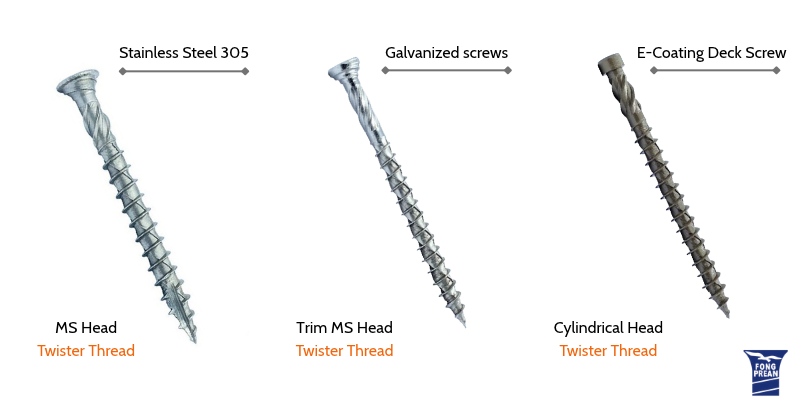
| Stainless steel deck screws | Stainless grade and exposure conditions | Material grade, treated-wood compatibility, and intended use |
| Hot-dip galvanized screws | Zinc coating specification | Suitability for the preservative treatment and project requirements |
| Proprietary coated deck screws | Coating system and compatibility | Documented ACQ suitability and any exposure limitations |
Stainless steel deck screws are an option where corrosion resistance is a priority. Type 304 can be considered for many general outdoor applications. In coastal locations or where salt and seawater exposure are expected, Type 316 is commonly considered for its greater resistance to chloride corrosion. The final specification should account for the product guidance and actual exposure conditions.
Hot-dip galvanized fasteners can also be considered when they meet the applicable specifications and are documented as suitable for ACQ-treated wood. The coating process matters. Electroplated zinc and hot-dip galvanized coatings can differ in thickness and corrosion performance, so a general “galvanized” description provides limited information for selection.
Proprietary coated deck screws require the same attention to documentation. Buyers should check whether ACQ-treated wood is explicitly included in the intended applications and review restrictions concerning persistent moisture or coastal exposure. Coating color alone does not establish compatibility.
Project requirements may further narrow these choices. The Build HD requirement for stainless steel is one example of a specification that determines the fastener material for exterior treated lumber.
After confirming the stainless grade, the next consideration is how the screw fits the decking application. Point, thread, and head geometry influence how it enters the board, draws the board against the supporting timber, and finishes at the surface.
Fong Prean’s CompoLock stainless decking screw is designed for ACQ-treated wood and composite boards. Its Turbo Slant Cut tip helps the screw bite into the material, while the U-Cut thread assists cutting as it advances. Arc Rings beneath the head help press the board against the support, and the cup head is designed to produce a clean, flush finish.
These features address the installation side of screw selection. For an ACQ decking project, they should be evaluated alongside corrosion resistance, board thickness, and the supporting structure. Confirming the stainless grade, screw diameter and length, and installation instructions helps match the selected product to the connection. Further details are available on the CompoLock stainless decking screw product page.
A useful fastener specification brings together the wood treatment, exposure conditions, board thickness, and supporting material. Providing these details allows suppliers to recommend a suitable material or coating and identify the relevant installation guidance.
The connection itself also determines the requirements. Deck board fastening and load-bearing connections each need products intended for their specific use. Connections involving deck framing, ledger boards, or other structural components should follow the structural design, with the appropriate design professional confirming the fastener specification and pattern.
Before installation, review screw spacing, embedment depth, and pre-drilling instructions. This connects the material selection with the practical details needed to install the fastener correctly.
1. Does ACQ-Treated Wood Always Require Stainless Steel Screws?
Suitable hot-dip galvanized fasteners and proprietary coated screws with documented ACQ compatibility may also be considered, depending on the application. Projects following the Build HD standard specify stainless steel for exterior pressure-treated lumber. Check the wood supplier’s guidance, screw documentation, and project requirements together.
2. Can Stainless Steel Screws Be Used with Galvanized Connectors?
Direct contact between dissimilar metals in damp conditions can promote galvanic corrosion. A general selection principle is to pair stainless steel fasteners with stainless steel connectors, and galvanized fasteners with compatible galvanized connectors. Follow the connector manufacturer’s specified fastener requirements.
3. Do Deck Screws for ACQ-Treated Wood Need Pre-Drilling?
Pre-drilling requirements depend on the screw design, board material, dimensions, and installation position. Follow the screw and decking manufacturers’ instructions, particularly near board ends and edges. Confirm the requirements for the specific product and connection before installation.
The Build Show Network. “In Build HD Standard, Which Type Of Fastener Is Required In Pressure Treated Lumber.” November 9, 2026. Read the original article
The Build Show Network. “Balconies, Decks & Railings — Build HD Standard.” View the standard overview