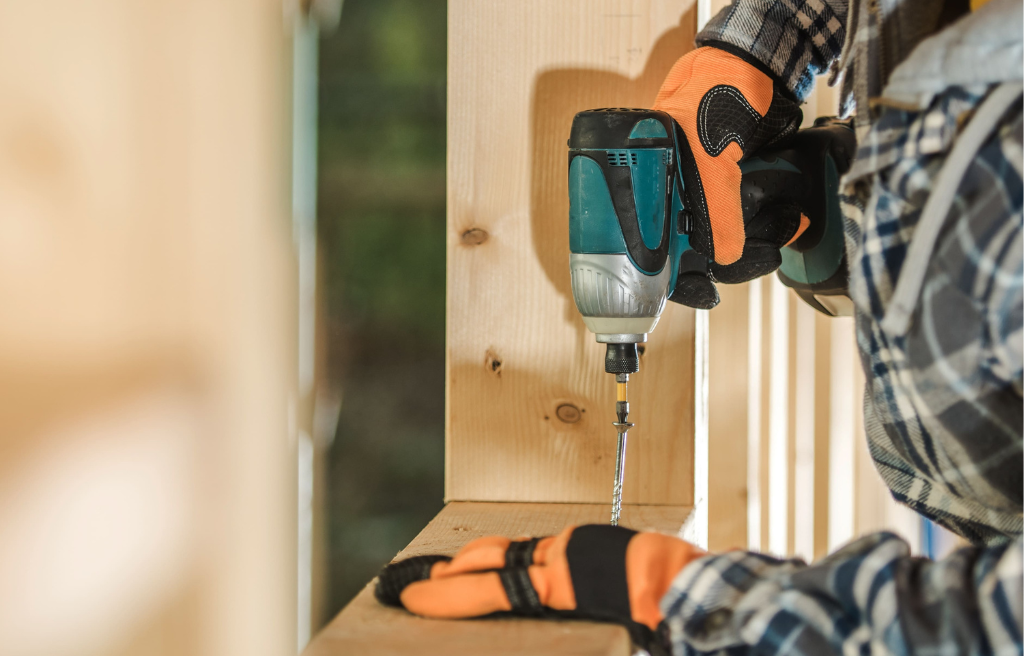
When customers ask us why one fastening project runs smoothly while another faces stripping, cracking, or unstable fixing, our answer is clear: the screw must match the material. In today’s construction environment, selecting the right construction screw is not just a product decision. It directly affects installation speed, structural reliability, labor efficiency, and long-term safety.
For buyers, contractors, project owners, and system developers, understanding the relationship between substrate and screw design can reduce costly installation errors and improve overall project performance. In this article, we explain how to choose the right screw for common building materials, what mistakes to avoid, and what factors matter most during selection.
Why Different Building Materials Need Different Screws
A construction screw is designed to perform under specific drilling, gripping, and load-bearing conditions. Different materials respond differently during installation:
- Wood fibers compress and can split
- Steel resists penetration and requires drilling performance
- Aluminum can deform under excessive force
- Composite boards vary in density and internal structure
- Cement boards are brittle and need stable holding without cracking
Because of these differences, using the wrong screw can lead to weak pull-out strength, damaged surfaces, failed installation, and unnecessary rework. This is why professional fastening selection should always begin with the material itself.
Quick Guide: Recommended Screw Types by Material
The following table provides a practical overview for common applications. Final selection should still be based on actual thickness, density, supporting structure, and installation method.
|
Building Material |
Recommended Screw Type |
Main Reason |
Key Selection Point |
|
Wood |
Wood screw, slash thread screw |
Better grip in wood fibers, lower splitting risk |
Wood density, moisture, embedment depth |
|
Aluminum sheet |
Fine-thread or self-drilling screw for thin metal |
Better control during penetration and clamping |
Sheet thickness, corrosion conditions |
|
Steel sheet / framing |
Self-drilling construction screw with high torque design |
Faster drilling and secure metal fastening |
Steel thickness, drilling capacity, tool torque |
|
Composite board |
Screw matched to board density and structure |
Improved grip without surface damage |
Layer structure, edge cracking risk |
|
Cement board |
Aggressive holding or expansion-supporting thread design |
Better holding power in brittle boards |
Board thickness, edge distance, support frame |
This table is useful as a starting point, but the best construction screw is always the one selected for the real application environment.
How We Recommend Selecting Screws by Material
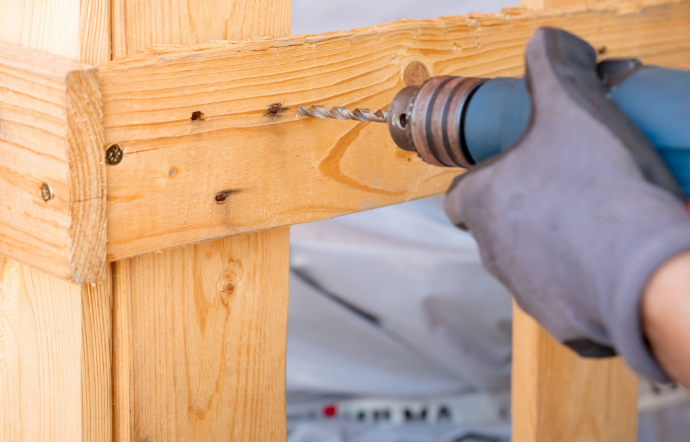
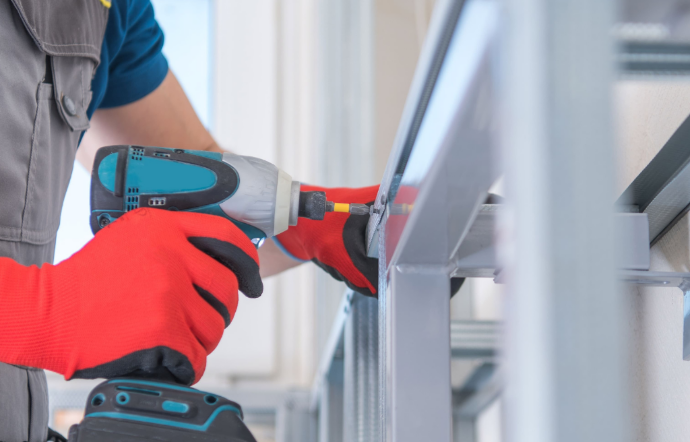
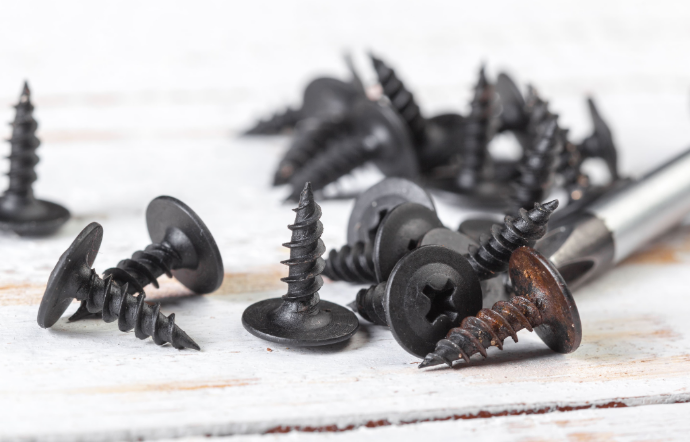
1. Wood: Focus on Fiber Grip and Split Prevention
For wood applications, screw selection should focus on thread engagement and pull-down performance. Wood screws and slash thread screws are commonly preferred because they bite into wood fibers effectively and help reduce splitting during installation.
This is especially important in framing, cabinets, decking, and interior wood assembly. If the thread geometry is not suitable, the screw may tear the fibers, fail to pull materials together properly, or create cracks near the edge.
Best Practice for Wood Applications
- Check wood hardness and density
- Consider pilot holes for dense hardwood
- Match screw length to required embedment depth
- Choose appropriate coating for humid or outdoor environments
2. Steel: Prioritize Drilling Capacity and Torque Stability
Steel sheet and light steel framing require screws that can penetrate efficiently while maintaining fastening stability. In these applications, self-drilling screws with high torque design are commonly the best choice.
The correct construction screw for steel improves installation speed, reduces operator fatigue, and minimizes drill point failure. This is particularly valuable for roofing, wall systems, ceiling systems, and industrial fabrication.
Best Practice for Steel Applications
- Confirm steel thickness before selection
- Match drill point design to substrate thickness
- Control driver torque to avoid over-driving
- Evaluate coating performance for corrosion resistance
3. Aluminum: Protect the Panel While Maintaining Fixing Strength
Aluminum may be softer than steel, but it requires careful control during fastening. If the screw design or tool setting is wrong, the panel may deform, the surface may be damaged, or fixing strength may become inconsistent.
For aluminum sheets, we recommend screws that provide clean penetration, controlled seating, and compatibility with the expected environment, especially in applications exposed to weather or mixed metals.
4. Composite Board: Match Thread Design to Board Density
Composite boards are widely used in modern construction systems, but their fastening behavior varies significantly depending on density and internal layer structure. Some boards require stronger bite, while others need surface protection and reduced cracking risk.
For this reason, we recommend that buyers and engineers evaluate the board composition carefully before choosing a construction screw. A screw that performs well in one composite material may not be suitable for another.
5. Cement Board: Improve Holding Strength Without Causing Cracks
Cement board is hard and brittle, so fastening must balance penetration and holding performance. If the screw is not properly matched, installers may face cracking, poor seating, and unstable fixation over time.
For cement board systems, a screw with stronger holding behavior or expansion-supporting thread design can help improve installation reliability. It is also important to consider board thickness, edge distance, and supporting structure.
Common Screw Selection Mistakes to Avoid
1. Choosing the Wrong Thread Type
A thread designed for wood will not provide the same performance in steel or cement board. Incorrect thread selection often leads to weak fixing or material damage.
2. Applying Too Much Torque
Over-torque can strip threads, deform panels, damage screw heads, and reduce joint reliability.
3. Ignoring Thickness and Density
Material thickness and density directly affect drilling, thread engagement, and holding performance. These factors should always be confirmed before specification.
Practical Buying Advice for Buyers and Project Teams
When evaluating a construction screw, we recommend reviewing these four factors first:
- Material type
- Material thickness
- Material density or brittleness
- Installation tool and torque control
This approach helps reduce site errors, improve productivity, and lower the risk of fastening failure.
FAQ
Q1: What is the best construction screw for wood?
A1: Wood screws and slash thread screws are commonly used because they provide effective grip in wood fibers and help reduce splitting.
Q2: Why are self-drilling screws preferred for steel?
A2: They improve installation speed, reduce pre-drilling, and perform well when correctly matched to steel thickness.
Q3: Can one construction screw fit all materials?
A3: Not usually. The best results come from matching screw design to the substrate and installation conditions.
Q4: Why does torque setting matter?
A4: Incorrect torque can damage both the screw and the material, leading to unstable or failed fastening.
Q5: What should buyers check before choosing screws for cement board?
A5: They should review board thickness, brittleness, support frame material, and the required holding performance.
Why Work With Fong Prean
At Fong Prean, we understand that fastening performance depends on more than the screw itself. It depends on how the screw interacts with the substrate, the tool, and the real installation environment. With decades of manufacturing experience, strong R&D capability, and customized OEM/ODM development, we help customers find fastening solutions that improve safety, efficiency, and long-term reliability.
If you are looking for the right construction screw or exploring OEM/ODM screw development, we invite you to learn more about our R&D capability.