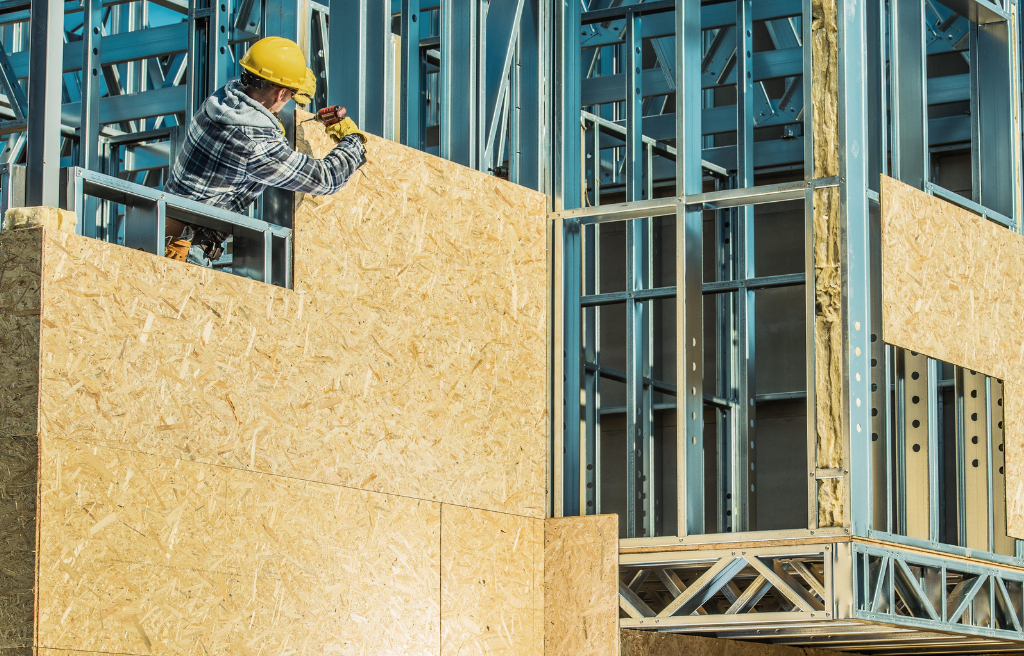
In the rapidly evolving landscape of modern architecture, the rules of the game are changing. If you are a project manager, a procurement officer, or a building owner, you are likely facing the same global challenges: severe labor shortages, rising material costs, and the relentless pressure to shorten project timelines. To overcome these hurdles, the industry is pivoting toward modular building, light gauge steel (LGS) framing, and dry construction methods.
However, as we push for lighter materials and faster assembly, a critical question arises: Are the fasteners holding these advanced structures together evolving at the same pace? At the heart of this broad transformation is the construction screw. No longer a mere commodity, the design and engineering of these fasteners must align with modern demands.
In this comprehensive guide, we will explore the industry trends reshaping construction, why fastening methods are transitioning away from traditional welding, and how advanced structural screws are becoming the ultimate solution for speed, safety, and project integrity.
The Paradigm Shift in Modern Construction
The Rise of Modular Building and Dry Construction Methods
The traditional method of building on-site with heavy materials and wet trades is gradually being replaced. Today’s trend leans heavily towards prefab and modular construction. These methods involve manufacturing building sections in climate-controlled environments and rapidly assembling them on-site.
This shift to dry construction methods and light steel structures is driven by the pursuit of speed and flexibility. Procurement teams are sourcing lighter materials that reduce shipping costs and foundation loads. In these general applications—such as drywall, roofing, and flooring—a reliable construction screw is essential for maintaining efficiency. But as we move from general assembly to the core load-bearing framework, the joints become the most critical points of vulnerability. Here, the industry requires more than just standard hardware.
From Welding to Fastening: A Crucial Industry Observation
The Bottlenecks of Traditional Welding
For decades, welding was the gold standard for joining structural steel. However, our industry observation reveals a significant shift. Relying on welding introduces prominent pain points for modern, fast-paced projects:
Labor Shortages: Certified welders are increasingly scarce and expensive.
Weather Sensitivity: On-site welding requires specific conditions and can be severely delayed by rain or extreme winds.
Inflexibility: Welded joints are permanent, contradicting the modern need for adaptable or modular building designs.
The Upgrade to Structural Screws
Because of these bottlenecks, mechanically fastening core frameworks has become a highly preferred alternative. As we focus on structural joints and load-bearing performance, the general construction screw gives way to the highly engineered structural screw. These specialized fasteners allow for secure, predictable connections in a fraction of the time, bridging the gap between speed and structural safety.
Traditional Welding vs. Structural Screw Systems
To assist procurement and engineering teams in making objective, data-driven decisions, let's compare traditional welding with modern structural screw systems in light steel and modular applications.
Table: Comparison of Connection Methods in Light Steel Construction
Feature/Metric | Traditional Welding | Structural Screw Fastening |
Speed of Assembly | Slower (Requires prep, hot works, cooling, inspection) | Faster (Direct driving with power tools, immediate load-bearing) |
Labor Requirement | High (Requires highly paid, certified welders) | Lower (Can be executed by trained general contractors) |
Weather Dependency | High constraint (Cannot safely weld in wet/windy conditions) | High flexibility (Can be installed in most weather conditions, minimizing downtime) |
Reversibility | Permanent (Requires destructive cutting to modify) | High (Can be unscrewed for adjustments or modular dismantling) |
Quality Control | Variable (Dependent on the individual welder's execution) | Objective (Based on standardized shear/tensile strength specs) |
As the table illustrates, utilizing engineered structural screws provides practical advantages in schedule management and operational flexibility. This is why many architectural firms now evaluate screw-fastened joints as a primary option for LGS designs.
Value Proposition: Faster, Safer, and More Adaptable Designs
The core value of updating your structural fastening strategy lies in three pillars essential for modern architectural innovation:
Optimized Assembly Time: Time is money. Structural screws engineered for modern steel framing penetrate efficiently and hold securely, directly reducing labor hours on the critical path of the project schedule.
Predictable Load Performance: Modern buildings must withstand dynamic loads. Unlike rigid welds that may crack under stress, high-quality structural screws can offer calculated shear and tensile strengths, providing engineers with reliable data for structural integrity.
Sustainable and Reversible: As the circular economy influences global construction, buildings are increasingly designed for deconstruction. Structural screw systems allow temporary or modular structures to be dismantled safely, promoting material reuse and sustainability.
Frequently Asked Questions (FAQ)
To assist project owners and purchasing managers, we have compiled the most common questions regarding modern fastening solutions:
Q1: What is the difference between a standard?
A: A standard construction screw is often used for general applications like attaching drywall or wood trims. A structural screw is highly engineered with specific metallurgy, heat treatment, and thread design to handle heavy load-bearing requirements, shear forces, and structural steel connections.
Q2: Can structural screws completely replace welding in light steel framing?
A: Under specific design conditions, yes, they can serve as an excellent alternative. However, it is not an absolute "one-size-fits-all" replacement. The feasibility heavily depends on the project's specific load requirements, joint design, and must always be evaluated and approved by a licensed structural engineer.
Q3: How do these screws improve weather-related project delays?
A: Unlike welding, which poses safety hazards and quality issues in wet or windy conditions, structural screws offer high flexibility. They can be installed safely with power tools in a much wider range of weather conditions, keeping the project on schedule.
Q4: What anti-corrosion coatings are necessary for these structural joints?
A: For structural longevity, especially in outdoor or coastal environments, screws require advanced protective coatings (e.g., mechanical galvanizing, specialized multi-layer coatings, or bi-metal designs) to resist red rust and hydrogen embrittlement over the building's lifespan.
Q5: Are structural screws reusable in modular structures?
A: Yes. One of the greatest advantages of mechanical fastening is its reversibility. Screws can be backed out, allowing modular units to be separated, transported, and reassembled without damaging the core steel framework.
Partnering for the Future of Construction
As building materials and methods evolve, relying on outdated joining technologies is a risk modern projects cannot afford. The integrity of your modular builds, the speed of your assembly, and the safety of the final structure rely heavily on the hidden components holding everything together.
At Fong Prean, we understand that whether you need a reliable construction screw for general assembly or a highly engineered structural screw for load-bearing frameworks, precision is non-negotiable. With decades of manufacturing excellence, our R&D team continuously develops state-of-the-art fastening solutions tailored for modern construction challenges. If your project requires specific load capabilities, advanced coatings, or custom engineering through our oem screw services, we are equipped to support your technical needs.
Don't let legacy connection methods slow down your innovative architectural designs. Reach out to our expert engineering and sales team today to discuss how we can optimize your next project. Contact Fong Prean to secure the future of your builds.