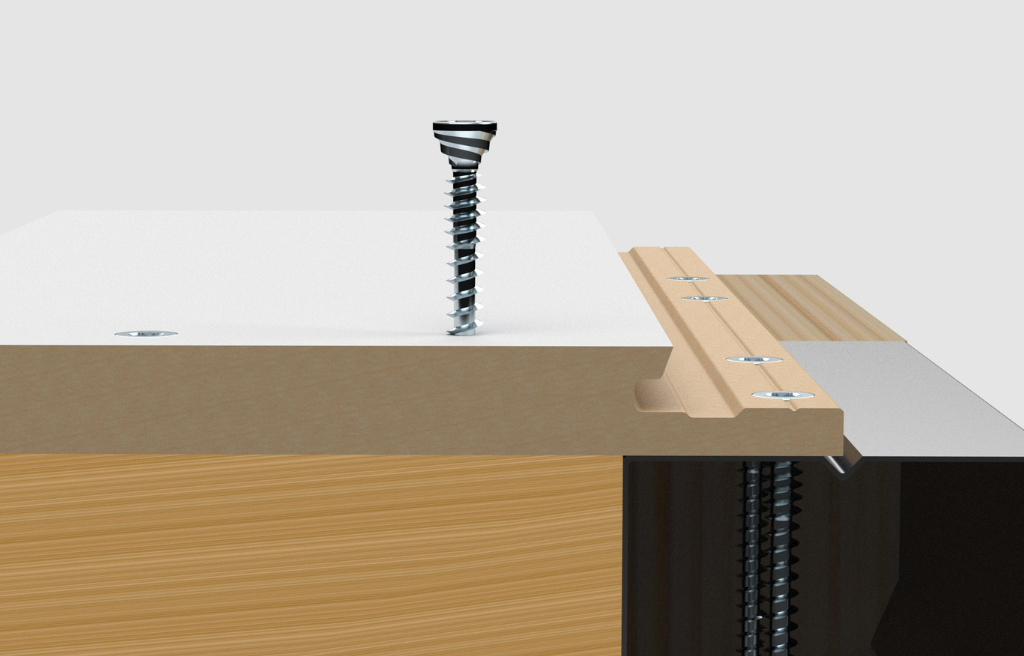
MDF is often selected for a good reason. It offers a smooth surface, consistent density, and a refined appearance that works well in furniture, cabinetry, shelving, decorative panels, and interior fit-out.
But once fastening begins, MDF becomes a very different conversation.
Many installers and manufacturers have seen the same issue: the screw goes in, yet the result still feels imperfect. The surface around the head may look slightly rough. The board edge may show stress. The joint may hold, but not with the level of confidence expected from a clean, finished assembly.
That is why choosing the right screw for MDF is not just about whether the fastener can penetrate the board. It is about whether the fastening method supports clean surface quality, stable holding, and repeatable results in real production or installation conditions.
Why MDF Requires a Different Fastening Mindset?
One of the biggest mistakes in MDF assembly is treating MDF like solid wood.
MDF may look smooth and uniform, but its internal structure behaves differently under screw pressure. Woodworking guidance on MDF joints consistently emphasizes that screws can force the fibers apart, especially near edges, and that pilot holes and countersinking are often important for reducing splitting and achieving a flush finish.
This is why MDF often exposes fastening problems early. A screw that works acceptably in other materials may still create swelling, surface breakout, or unstable grip in MDF. So the real question is not simply whether the screw can go in, but whether it can do so with enough control to protect both the material and the final appearance.
What a Good Screw for MDF Should Actually Do?
A good MDF screw should solve several problems at once.
It should start cleanly, so the screw does not wander or damage the visible face during entry. It should grip the board without creating too much internal stress. And it should seat neatly, because in furniture and interior applications, a flush and tidy finish is part of the product standard, not an extra feature.
In practice, this means the best screw for MDF is not simply a generic screw with more torque or a sharper point. It is a screw that works with how MDF behaves.
Choosing a Screw by Application
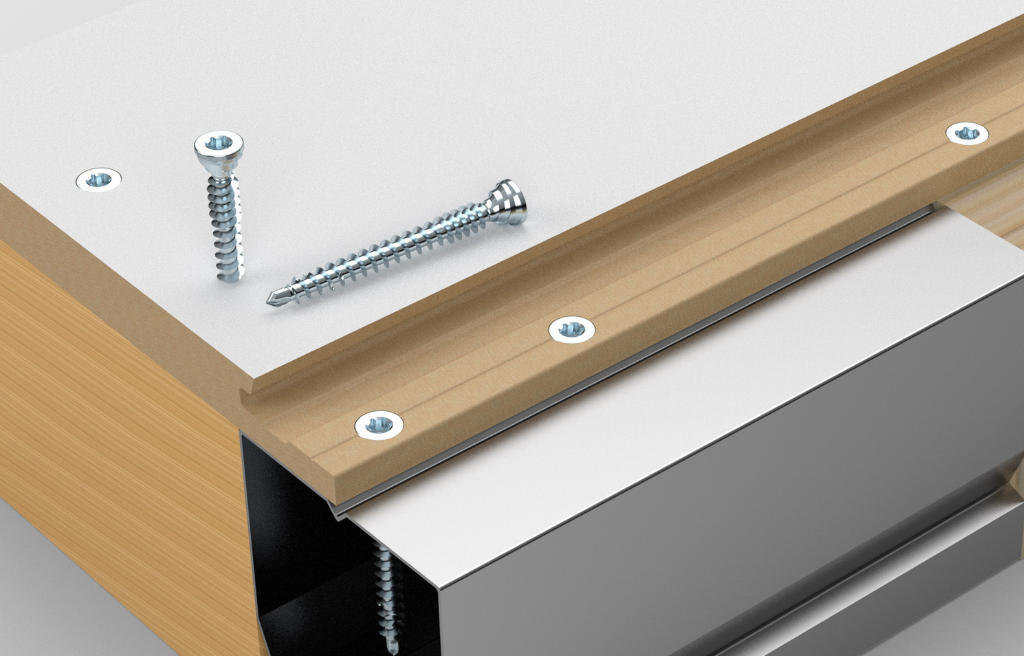
The best screw for MDF depends on what the board is being fastened to.
- MDF Board to Wood
This is one of the most practical and common assembly situations. The MDF surface still needs to stay neat, but the screw also has to pull securely into wood beneath it. If the screw design is poorly matched, the top MDF layer may show rough seating or stress even when the joint feels tight.
- MDF to Steel Stud
When MDF is fixed to a steel stud or light gauge steel substrate, the fastening demand increases. The screw must manage the MDF side cleanly while still penetrating the metal side efficiently. This is where many standard wood screws begin to feel like a compromise rather than a solution.
- MDF to Aluminum
MDF-to-aluminum fastening adds another level of material difference. The fastener must control entry, maintain holding performance, and avoid creating an untidy surface on the MDF side while still handling the metal connection properly.
This is why the phrase screw for MDF is often too broad on its own. The more accurate decision comes from understanding the full material combination and the finish expectation around it.
When a Specialized MDF Screw Becomes the Logical Next Step?
Once MDF fastening is viewed through that lens, the need for a more suitable screw becomes clear. This is not about adding features for the sake of marketing. It is about reducing avoidable variables. When the wrong screw causes inconsistent entry, rough seating, or unstable hold, the cost appears in rejected parts, extra handling, slower assembly, and reduced confidence in the result.
That is where Fong Prean Multi-Purpose MDF Screw becomes relevant. It is designed for MDF-related fastening, especially for MDF board to wood, MDF to steel stud, and MDF to aluminum applications. In practical terms, that means one screw can support three different joining methods instead of forcing buyers to switch between separate fastener types for each assembly condition. It features an MS countersunk head for a clean flush finish, a U-Cut thread to improve fiber cutting and grip, and a sharp-drill point developed for MDF board to light gauge steel or aluminum up to 0.6 mm.
For users, that advantage is meaningful. It helps simplify selection, reduce trial-and-error during production, and maintain fastening consistency when product lines or jobsite conditions involve more than one substrate.
Frequently Asked Questions About Screws for MDF
Q1: What is the best screw for MDF?
A1: The best screw for MDF is one that provides controlled entry, reliable grip, and a clean flush finish without overstressing the board.
Q2: Is MDF usually the top joined material in assembly?
A2: In many practical applications, yes. MDF is often used as the upper visible board, so clean seating and surface finish are especially important.
Q3: Can one MDF screw work for wood, steel stud, and aluminum?
A3: Some can. Fong Prean’s Multi-Purpose MDF Screw is specifically presented for MDF board to wood, MDF to light gauge steel, and MDF to aluminum applications.
Q4: What is the advantage of a multi-purpose MDF screw in B2B projects?
A4: It can simplify fastener selection, reduce trial-and-error, and improve fastening consistency when multiple substrate combinations are involved.
Final Thoughts
The right screw for MDF is not simply the one that fits the material, but the one that supports a cleaner and more reliable assembly result. When MDF is fastened to wood, steel stud, or aluminum, that decision becomes part of the overall build quality, not just a small hardware choice.